Creating a Positive Onboarding Experience: 10 Tips for Business Owners
Onboarding is more than completing paperwork—it is the structured process that helps new employees settle into their role, understand the organisation, and integrate into its culture. A well-designed onboarding programme improves engagement, accelerates productivity, and increases retention, making it a critical investment for business owners.
1. Start Before Day One
Effective onboarding begins as soon as the new hire accepts your offer. Engaging employees early—through a warm welcome email, first-day schedule, key contacts, and any forms that can be completed in advance—builds excitement and reduces first-day nerves. Sharing a brief introduction to the team or company culture helps them feel connected even before their first day. Early engagement demonstrates organisation, thoughtfulness, and commitment to creating a positive employee experience.
2. Prepare the Essentials
A smooth first day depends on preparation. Ensure that workspaces, IT systems, logins, emails, and equipment are ready in advance. Small touches, such as a welcome pack or guided office tour, can make a significant difference. Being organised from day one allows new hires to focus on learning their role and helps them feel valued, creating a positive first impression.
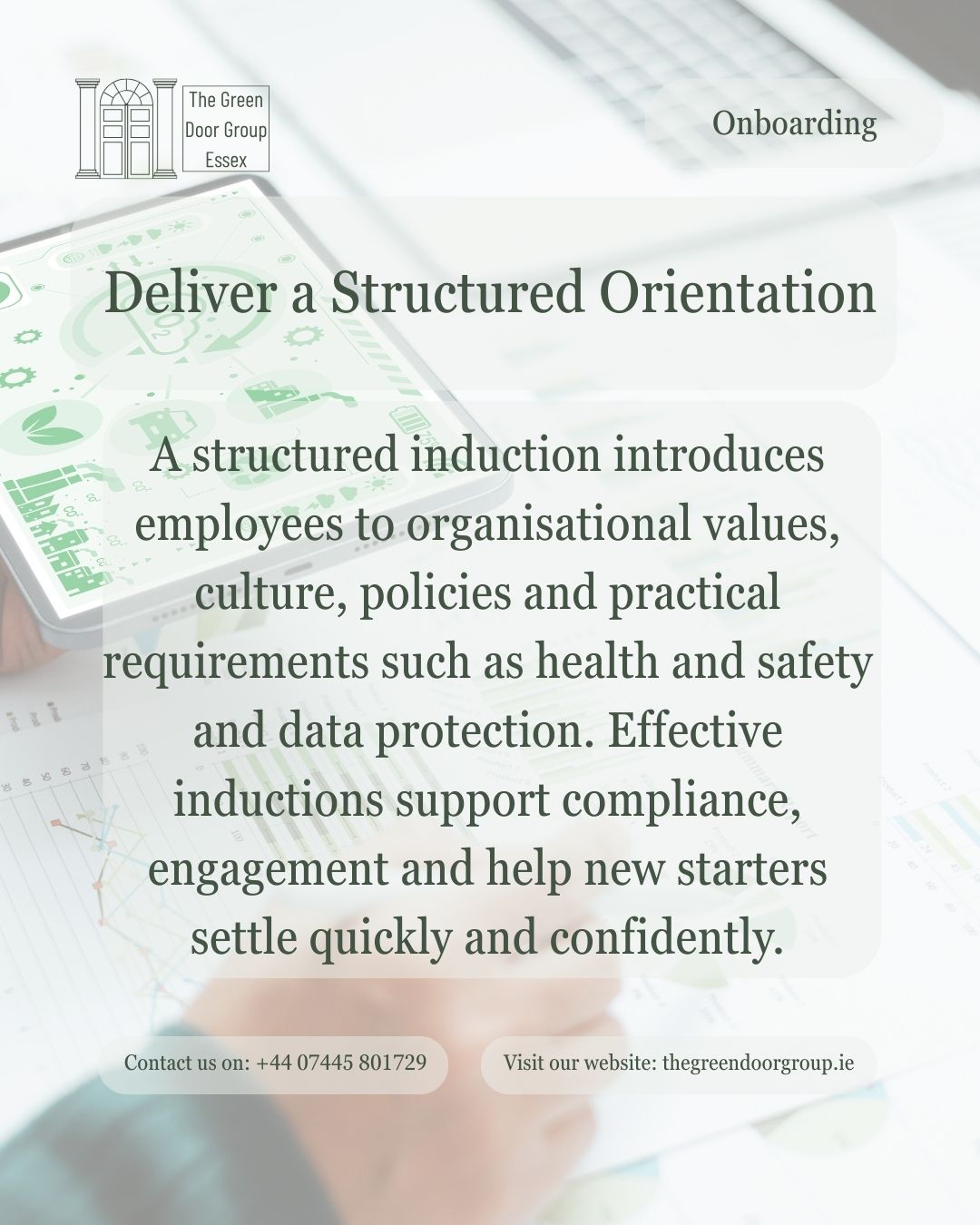
3. Deliver a Structured Orientation
A formal induction programme is the foundation of successful onboarding. Include:
Company mission, vision, and values
Strategic goals and culture
Key policies, including health & safety, GDPR, and flexible working
Interactive sessions, Q&A opportunities, and team introductions ensure new employees feel informed, confident, and connected. A structured orientation helps them understand both practical expectations and the organisation’s culture.
4. Clarify Roles and Expectations
Clear communication of responsibilities and expectations is essential. Sit down with your new hire to outline their role, KPIs, and short-term objectives using a 30‑60‑90 day plan. This reduces confusion, builds confidence, and helps employees understand how their work contributes to organisational goals. Role clarity is also a key factor in retention and engagement.
5. Assign a Buddy or Mentor
Pairing new employees with an experienced colleague provides informal guidance and support. A mentor or buddy can answer questions, share insights, and help the new hire navigate company culture. This accelerates learning, builds confidence, and strengthens engagement. Mentoring also fosters collaboration and a culture of knowledge-sharing.
6. Facilitate Social Integration
Social connections are critical to employee engagement. Encourage team introductions, informal catch-ups, or team lunches to help new hires feel included. Feeling socially connected accelerates integration, improves collaboration, and increases motivation. A focus on social integration during onboarding strengthens team cohesion and workplace culture.
7. Communicate Openly
Maintain open, transparent communication throughout the onboarding period. Encourage questions, provide constructive feedback, and hold regular check-ins. This builds trust, demonstrates that employee input is valued, and helps address any challenges early. Employees who feel supported and heard are more engaged, productive, and likely to remain with the organisation.
8. Embed Culture into the Experience
Onboarding is an opportunity to immerse employees in your company culture. Share stories, examples, and practical demonstrations to illustrate “how things are done here.” Introduce employees to role models and behaviours that reflect organisational values. Embedding culture early helps new hires adopt positive behaviours, integrate faster, and contribute effectively to the team.
9. Provide Ongoing Support and Growth
Support should extend beyond the first few days. Introduce training programmes, development opportunities, and career pathways early on. Encourage mentoring and regular check-ins to maintain engagement and motivation. Employees who see opportunities for growth are more productive, loyal, and likely to stay long-term, creating a stronger, more capable workforce.
10. Measure and Improve Your Process
Continuous improvement ensures onboarding remains effective and relevant. Collect feedback at 30, 60, and 90 days, and review engagement, performance, and retention metrics. Use these insights to refine processes, address gaps, and enhance the new hire experience. A well-evaluated onboarding programme accelerates integration, improves productivity, and supports long-term retention.
Conclusion: Onboarding as a Strategic Advantage
By implementing these ten tips—pre-boarding, preparation, structured orientation, role clarity, mentoring, social integration, open communication, cultural embedding, ongoing support, and continuous improvement—business owners can create an onboarding experience that sets employees up for success.
Effective onboarding strengthens team cohesion, improves engagement, and drives organisational growth, turning new hires into confident, capable, and committed members of your workforce.
Our outsourced HR services give business owners confidence and peace of mind.
📞 Need Support With Absence Management?
If you are reviewing your onboarding process or creating thinking about creating one, The Green Door Group Essex can help ensure compliance, clarity and consistency.
👉 Contact us today to discuss outsourced HR support tailored to your business.