How accumulated pressure erodes energy, judgement and engagement long before performance drops.
In businesses today, not all talent loss shows up as resignations.
Some of the greatest threats to performance hide in quiet disengagement. People still show up and deliver - but with less energy, creativity and emotional presence than before.
Soft burnout is one of the earliest human signs that those aftershocks are now being absorbed by people.
Most individuals are still performing. Deadlines are still being met. Clients are being served and standards are maintained. But beneath the surface, something more dangerous is happening: the spark is fading.
This piece is a strategic warning - an invitation for leaders to look closely at what’s happening in themselves and their organisations before early warning signs turn into a more serious leadership challenge.
While this article draws heavily on what I’m seeing across the UK’s high-pressure firms, many of these patterns are now emerging globally.
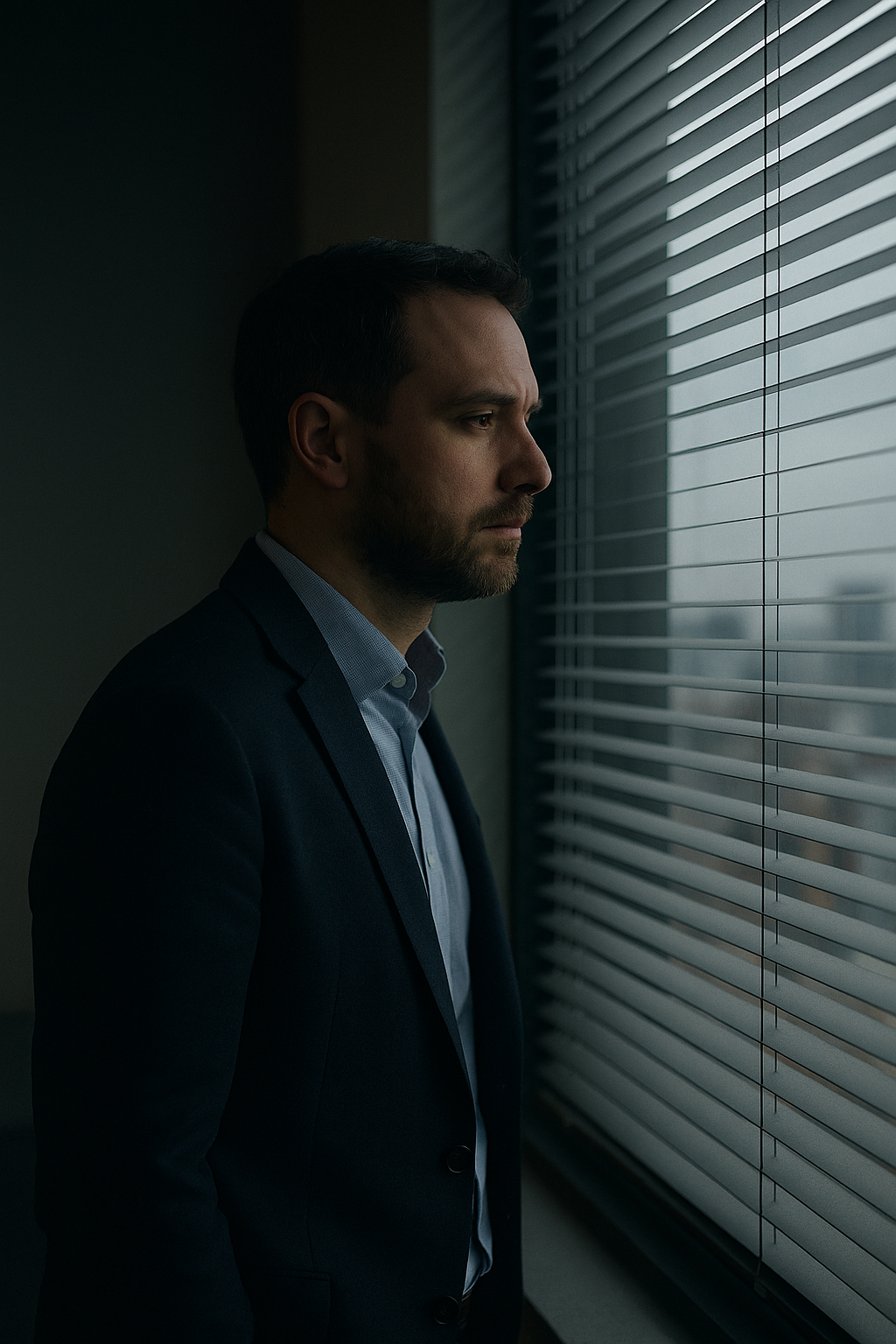
The Slow Fade No One Notices at First
It isn’t a dramatic breaking point.
It’s the slow erosion of energy, creativity and emotional presence.
People still show up.
They hit deadlines.
They deliver.
But inside, the energy is lower. The motivation is thinner. The engagement just isn’t there.
It’s the difference between being fully engaged and simply getting through the work.
And right now, that slow fade is no longer an exception, it’s becoming the dominant experience across many high-pressure firms.
As one law-firm partner put it to me recently: “Without doubt, soft burnout is becoming a major issue.”
Why It’s Surging in the UK Right Now
-
restructures, redundancies and sackings are creating uncertainty and survivor guilt
-
more work spread across fewer people
-
client demands intensifying as pressure cascades downstream
-
longer hours quietly re-establishing themselves
-
leaders feeling personally responsible for holding everything together
Layered on top of this is the cultural DNA of high-pressure firms:
-
perfectionism is normalised
-
responsiveness is rewarded more than sustainability
-
rest looks like a luxury
-
emotional labour is invisible
-
high performers self-silence for fear of appearing weak
In this environment, soft burnout isn’t just possible, it’s predictable.
And while the UK is feeling these pressures acutely, I’m seeing the same patterns across Europe, the US and Asia.
Different geographies. The same underlying strain.
Soft Burnout: When the Spark Starts to Die
-
still delivering, but no longer energised
-
reliably completing tasks, but with reduced creativity
-
emotionally present, but not emotionally connected
-
tired, even after rest
-
drifting toward low-value work instead of strategic work
-
experiencing a quiet internal “numbing out”
None of these show up in KPIs, all of them quietly erode long-term performance.
Soft burnout doesn’t stop people working, it limits the judgement, creativity and emotional presence they bring to their work.
Left unaddressed, this doesn’t just affect wellbeing, it degrades judgement, decision-making and leadership capacity.
What the Evidence Tells Us
Burnout is not an overnight event.
Occupational-health research describes it as a cumulative condition driven by chronic stress, characterised by:
The Chartered Institute of Personnel and Development (CIPD) notes that workplace stress arises from excessive pressures and demands over time, highlighting that unmanaged stress is a key precursor to burnout and related outcomes.
In the legal sector, a 2025 survey found that nearly 80% of legal professionals reported experiencing feelings associated with burnout at least sometimes in the past year, underlining the scale of emotional strain within high-pressure environments.
Gallup’s research also points to sustained emotional pressure. Recent reporting of Gallup data showed that UK workers rank among the most disengaged in Europe, with only around 10% reporting they were engaged at work, alongside elevated levels of negative daily emotions such as sadness and loneliness.
Soft burnout doesn’t stop people working.
It reduces how present, engaged and effective people feel in their work.
Organisations rarely lose performance suddenly.
They lose it gradually - through disengagement that still looks like competence and this is where leaders are most likely to misread what they’re seeing.
Why High Performance Suffer First
The people who look most resilient are often carrying the greatest risk.
High achievers tend to:
-
hide symptoms by pushing harder
-
tie identity to output
-
avoid asking for support
-
absorb more emotional load
-
fear letting others down
-
feel responsible for holding the team together
They don’t collapse dramatically.
They keep over-functioning as their capacity quietly drains away.
This is why leaders must look beyond performance to understand what’s really happening.
Soft burnout hides inside excellence, and that’s why it’s so often missed.
What I’m Hearing in Client Conversations
When I recently explored soft burnout with a client, they paused for a long moment, then said quietly:
“This is me. I didn’t see it… but it’s me.”
From the outside, they were exceptional - respected, productive, dependable. On the inside, they felt drained.
Another client reached the same realisation but chose to move organisations, not because they lacked resilience, but because the culture they were in offered no space to recover or reset.
In both cases, we didn’t treat wellbeing as the issue. We addressed the conditions they were working within.
Burnout is often a product of the system, not the person.
It isn’t a personal flaw to fix, it’s an environment that needs resetting.
For those clients, that meant:
-
removing low-value noise from the week
-
protecting energised hours for deep, strategic work
-
building short recovery spaces into the day
-
reducing constant firefighting
-
setting firmer boundaries with clients and colleagues
These aren’t wellness tactics, they’re leadership conditions.
And once those conditions changed, energy returned, not because the individuals changed, but because the environment finally did.
Why “Chasing Cars” Captures Soft Burnout
“If I lay here,
If I just lay here…”
Soft burnout sounds like that:
This isn’t sentimentality.
It’s what humans sound like when they’re pushed beyond their emotional capacity.
This is soft burnout long before anyone names it, a human response to sustained pressure, not a personal weakness.
The emotional equivalent of running on empty and hoping no one notices.
What Leaders Must Do Now
While the context may differ country to country, the leadership responsibilities remain the same: notice early signals, protect the conditions people operate in, and act before performance is affected.
Here’s what that looks like in practice:
1. Prioritise energy as much as output
-
Performance shows what’s being delivered.
-
Energy shows what’s about to break.
-
Ask about energy in 1-to-1s. Protect peak thinking hours. Act early when depletion appears, not after results suffer.
2. Create permission to say “I’m struggling”
-
People don’t speak honestly because they’re brave, they do so because leaders make honesty normal.
-
If vulnerability feels risky, silence becomes the default.
3. Equip managers with human judgement
-
Burnout develops in the spaces dashboards don’t show.
-
Leaders must be able to notice shifts in energy, motivation and presence, not just output.
-
Empathy here isn’t softness. It’s competence.
4. Ask better questions
5. Model boundaries and recovery
6. Protect thinking time
-
Judgement, creativity and strategy require oxygen.
-
Firefighting cultures survive - but they don’t think.
7. Stop mistaking overwork for commitment
-
Long hours often signal overwhelm or emotional withdrawal, not loyalty.
-
When effort rises but energy falls, pay attention.
Soft burnout thrives in silence.
It reverses through conversation, clarity and leadership courage.
Before the Cost Shows Up in Performance
Soft burnout is now one of the most significant hidden risks facing high-pressure firms - not because people are breaking, but because they are quietly fading.
Leaders who rely solely on performance metrics will miss the moment judgement, engagement and energy begin to erode.
And once the spark has gone, recovery is still possible, but it demands far more time, courage and capacity than early action ever would.
In the Aftershock Era, clarity about people is not a soft skill.
It is now a strategic necessity.